Mr Mattine · Structure. Balance. Individuality.
Facial Implants
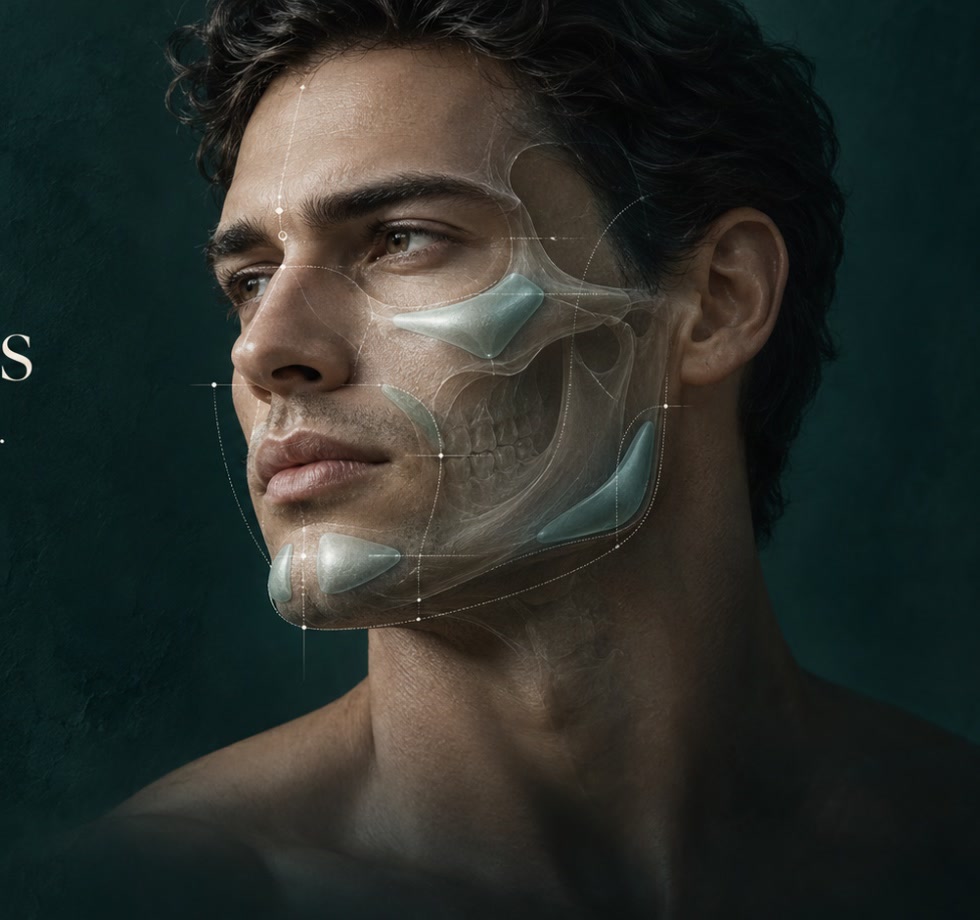
Ready made and bespoke implants to bring definition to the chin and jawline, prominence to the cheeks, or support to the midface where the underlying bone is less developed.
Facial structure and refinement
Facial implants
Considered structure. Individual balance.
The contours of the face are shaped by the relationship between its underlying framework and the soft tissues that surround it. A recessed chin, limited cheek projection or an underdefined jawline can influence the balance of the entire face.
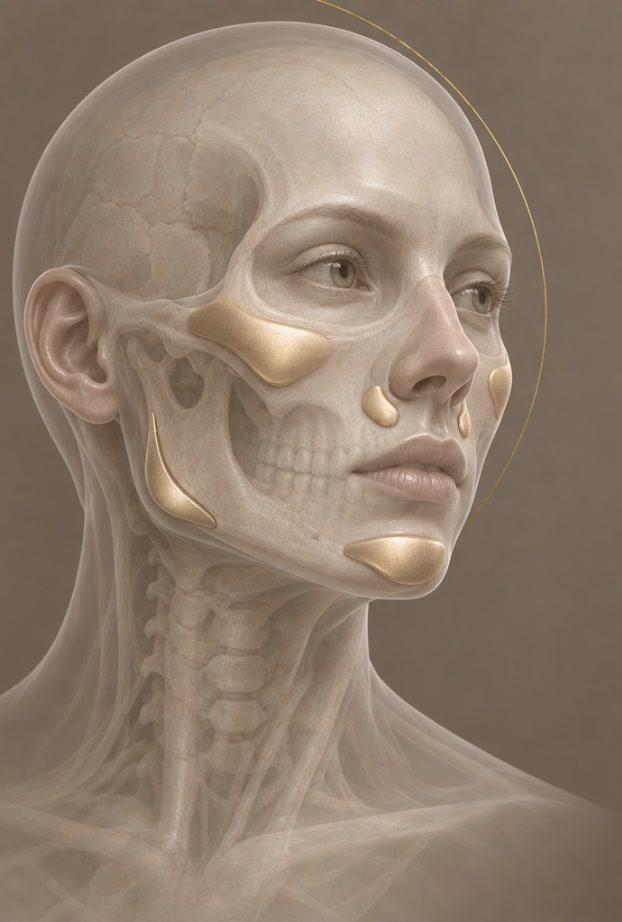
Facial implants offer a way to enhance that framework. Carefully selected or individually designed, they can bring definition to the chin and jawline, prominence to the cheeks, or support to areas of the midface where the underlying bone is less developed.
Mr Mattine offers both ready made and bespoke facial implants, with each recommendation guided by your anatomy, your preferences and the face as a whole.
Their role also extends to facial rejuvenation. As the face ages, changes in bone and soft tissue can reduce support and volume. In selected patients, implants can help restore structural support and improve contours as part of an individual rejuvenation plan.

Facial implants
The face as a whole
A change to one feature can alter the way every surrounding feature is perceived.
Strengthening the chin may bring the nose into better proportion. Enhancing the cheekbones can change the apparent width of the lower face. Supporting the area beside the nose may soften a recessed midfacial profile.
For this reason, Mr Mattine assesses the relationship between the forehead, temples, cheeks, under eye region, nose, chin, jawline and neck before recommending an implant.
Sometimes one carefully chosen implant is sufficient. In other patients, a combination of structural enhancement and soft tissue surgery offers a more balanced approach. The aim is a result that belongs naturally to your face.
Where implants can make a difference
Where facial implants can make a difference
Chin implants
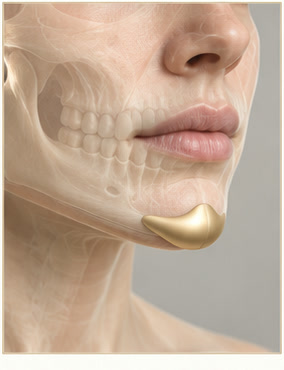
The chin plays an important role in facial proportion, both in profile and from the front. An implant can improve projection, refine width and strengthen the transition between the chin and jawline. Its shape matters as much as its size. A subtle, tapered contour may suit one face; a broader, more defined chin may suit another. The choice is made in relation to the lips, nose, lower jaw and neck. Where the required change involves substantial repositioning of the chin bone, correction of vertical proportions or a more complex skeletal problem, genioplasty may be more appropriate.
Cheek and malar implants
Malar implants enhance the prominence and shape of the cheekbones. They may be considered where the cheeks lack projection or where greater definition would improve the relationship between the midface and lower face. The intended effect may be subtle support or a more distinct cheek contour. Careful selection helps avoid excessive width or an appearance that feels out of keeping with the rest of the face.
Infraorbital and midface implants
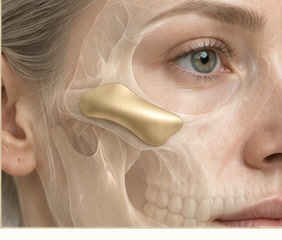
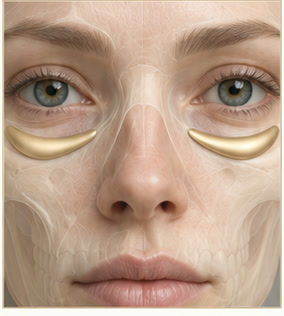
Hollowness beneath the eyes does not always arise from a loss of soft tissue volume. In some faces, limited projection of the underlying bone contributes to a recessed appearance at the junction between the lower eyelid and cheek. Infraorbital implants can augment this skeletal framework in selected patients. They may be designed to extend into the malar region where both under eye support and cheek projection require attention. They serve a different purpose from a conventional cheek implant and do not address every cause of under eye hollowing. Eyelid anatomy, skin quality and soft tissue volume must also be assessed.
Paranasal implants
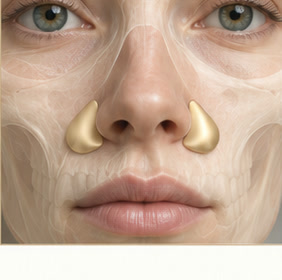
Paranasal implants enhance the areas beside the base of the nose. They may be useful where a recessed bony foundation contributes to central midface flatness or a pronounced transition between the nose and surrounding face. In suitable patients, this can improve support around the nasal base and soften the appearance of an associated depression. It does not, however, reliably eliminate nasolabial folds caused by skin laxity or soft tissue descent.
Jaw angle and gonial angle implants
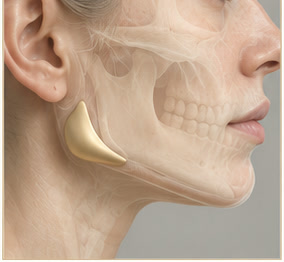
The gonial angles form the back corners of the lower jaw. Their shape and projection influence the definition of the jawline and the proportions of the lower face. Implants can increase width, enhance angular definition or, with an appropriate design, extend the lower contour of the jaw. Bespoke implants may also help address differences between the two sides. The design is tailored to the individual: stronger definition for some faces, a more restrained refinement for others.
Temple implants
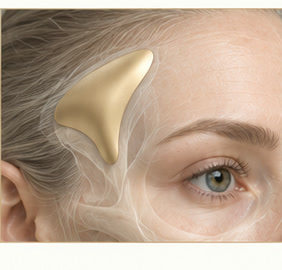
Hollowing at the temples can interrupt the transition between the forehead, outer brow and cheekbones. Temple implants offer a structural option for selected patients seeking a lasting increase in fullness in this area. The degree and cause of hollowing determine whether an implant, fat grafting or another approach is most appropriate.
Ready made or bespoke?
Ready made facial implants
Ready made implants are manufactured in established shapes and sizes for particular facial regions. For many patients, a carefully selected design provides the desired enhancement without the need for individual manufacture.
Selection involves more than choosing a size. The implant's contour, projection, footprint and relationship with the surrounding tissues all influence the result.
Silicone and porous polyethylene, commonly known by the brand name Medpor, are two established options. Each has characteristics that may make it more suitable for a particular anatomical concern.
Bespoke PEEK implants
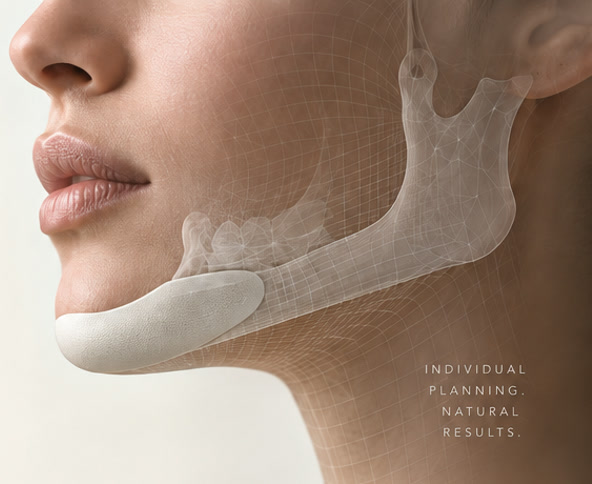
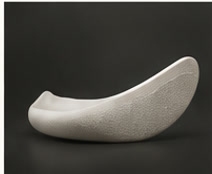
Patient specific implants are designed for one person's anatomy. PEEK, polyetheretherketone, is a medical grade polymer that can be manufactured into a precisely planned implant.
A CT scan provides a three dimensional representation of the facial skeleton. Working with a specialist design team, Mr Mattine plans the implant's shape, dimensions and intended position in relation to the underlying bone and the proposed change.
This approach can be particularly useful for asymmetry, unusual anatomy, previous surgery, or an enhancement that cannot be achieved satisfactorily with an available standard design. It also allows adjacent regions to be considered together, such as the infraorbital and cheek areas or the chin and jawline.
Bespoke design gives greater control over the implant's geometry and fit. It does not guarantee perfect symmetry or an exact soft tissue result. The tissues covering the implant, healing and natural facial movement continue to influence the final appearance.
Additional time is required for imaging, design and manufacture. A custom implant is recommended when that additional planning offers a meaningful benefit.
Ready made facial implants: material options
Silicone and Medpor are two established options for ready made facial implants.
Silicone
Solid silicone implants have a long history of use in facial augmentation. They are available in different contours and are relatively flexible, allowing placement through a carefully planned incision.
The body forms a capsule around the implant rather than growing through its substance. This generally makes silicone implants more straightforward to remove or exchange than implants with extensive tissue ingrowth.
Accurate positioning and stability remain essential. Potential concerns include movement, infection, visible or palpable edges and changes to the underlying bone, particularly with chin implants.
Medpor
Medpor is a firm, porous polyethylene material with a broad range of anatomical designs. This variety can offer useful options for contour deficiencies that are not well matched by a simpler implant shape.
Its porous structure allows surrounding tissue to grow into the implant, contributing to integration and stability. The same characteristic can make later removal more involved.
In Mr Mattine's experience, infection with Medpor has been uncommon, although he has treated cases in which infection required removal. This possibility forms part of the discussion before surgery.
An individual choice
No implant material is the best choice for every patient. Infection can occur with silicone, Medpor or PEEK, and published comparisons do not establish a consistent infection advantage for one material across all facial regions and procedures.
Mr Mattine considers the required shape, the quality of tissue coverage, previous surgery, the need for secure positioning and the implications of any future revision when recommending an implant.
Advanced solutions
Customised PEEK implants for facial surgery
Precision by design. Mr Samuel Mattine has extensive experience with patient specific PEEK implants, having been one of the first surgeons in the UK to use this technology for facial cosmetic surgery since 2013. Since then, he has used customised PEEK implants extensively to achieve highly precise and natural facial enhancement.
Customised PEEK implants combine advanced imaging, digital planning and 3D printing with surgical expertise, offering a level of precision and individualisation that is not possible with standard implants. This technology allows a result that is in harmony with your facial anatomy and your personal aesthetic goals.
The process
From scan to a perfect fit
Advanced digital planning for truly personalised results.
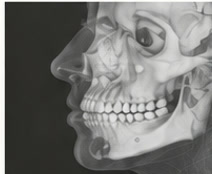
1. 3D imaging
A high resolution 3D CT scan of your facial skeleton is taken to create a detailed digital model.
›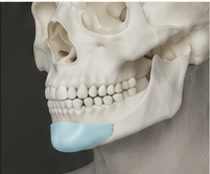
2. Virtual design
Your implant is designed digitally, allowing precise control of shape, projection and contours to match your anatomy and aesthetic goals.
›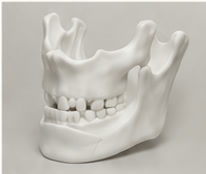
3. 3D printing
A 3D model of your facial skeleton is printed and your custom implant is manufactured using advanced 3D printing technology.
›
4. A perfect fit
The implant is precisely matched to your anatomy, allowing accurate and predictable results.
The advantages
Why choose a customised PEEK implant?
Precision
Designed to your exact anatomy for optimal fit and symmetry.
Fully customised
Complete freedom to create the exact shape and movement to achieve your goals.
Advanced 3D technology
Planned from high resolution imaging and 3D printed models for exceptional accuracy.
Strong and stable
PEEK is a biocompatible, durable material with long term stability.
Natural results
Integrates with your facial structure for a refined, natural look.
Proven experience
Used extensively by Mr Mattine since 2013, with an exceptional track record.
Placement matters as much as design
An implant needs to be appropriate in shape and size, accurately positioned and stable within the tissues.
Mr Mattine's approach places particular emphasis on the relationship between the implant and the underlying anatomy. Planning addresses the fit, the surgical pocket and the method of stabilisation, with the aim of reducing unwanted movement and excessive local pressure.
These considerations are relevant to two frequently discussed concerns: displacement and bone resorption. Displacement occurs when an implant moves from its intended position. Bone resorption describes loss of bone beneath an implant and has been reported particularly in the chin. Its extent and clinical significance vary.
Mr Mattine uses techniques intended to minimise these risks. However, no technique can guarantee that displacement or bone changes will never occur. The approach appropriate to your anatomy will be explained during consultation.
Lasting change, honest limits
A lasting change, with the possibility of revision
An important distinction between an implant and an osteotomy is how the change is achieved. An implant adds contour to the existing framework; an osteotomy cuts and repositions the patient's own bone.
Facial implants are intended to remain in place long term, but they can often be removed or exchanged if a different contour is desired or a complication develops. This flexibility can be an important consideration when choosing treatment.
Removal is nevertheless another operation. Its complexity depends on the implant material, location, fixation and surrounding scar tissue. It does not necessarily restore the exact appearance present before surgery, and further treatment may be needed to address changes in the tissues or bone.
The choice between an implant and bone surgery should therefore begin with the change your face requires, alongside your preferences about treatment and future revision.
When an implant is not the right answer
Facial implants are most useful when additional structural contour is required. They do not correct every concern involving facial shape.
Where the main issue is soft tissue volume loss, fat grafting or filler may be more appropriate. Where tissues have descended, lifting or repositioning may be needed. Significant jaw discrepancies or bite problems may require assessment for corrective jaw surgery.
Mr Mattine will discuss these alternatives where relevant, including whether a combination of treatments would better address your concerns.
Your consultation and surgical plan
Consultation begins with what you would like to change and how you would like your face to feel in balance.
Mr Mattine assesses your facial proportions, skeletal contours, soft tissues and any previous treatment. The discussion includes the proposed area of enhancement, the choice of ready made or bespoke implants, material selection, surgical access and the limitations of treatment.
Imaging is arranged when appropriate, particularly for patient specific implants or complex revision surgery. Any visual planning or simulation is used to explain the proposed change and is not a guarantee of the final result.
You will receive an individual treatment outline and quotation. Mr Mattine remains personally involved throughout your care, including postoperative assessment and review.
Experience across the facial skeleton
Why choose Mr Mattine for facial implant surgery?
More than 20 years of facial implant experience, grounded in a practice dedicated exclusively to facial surgery.
Expertise beyond the chin. Mr Mattine's experience encompasses chin, malar, infraorbital, paranasal, jaw angle and temporal implants. His understanding of facial skeletal deformities and the overlying soft tissues informs a plan that considers the face as a whole.
A broad choice, an individual plan. Extensive experience with implants from a wide range of manufacturers allows Mr Mattine to consider different designs, materials and approaches. Selection is guided by your anatomy and the intended change, rather than a single implant system.
Early experience with bespoke PEEK. An early UK adopter of patient specific PEEK implants for cosmetic facial surgery, Mr Mattine brings experience in both ready made implants and bespoke solutions for more complex structural concerns.
International expertise, personal care. Internationally recognised for his facial implant expertise, Mr Mattine treats patients travelling specifically for implant surgery from countries including Japan and Germany, and across the Middle East. He personally guides assessment, planning and postoperative review.
A considered approach to facial structure
The value of a facial implant lies in how well it serves the face around it.
With a practice dedicated exclusively to facial surgery, Mr Mattine brings structural assessment and aesthetic judgement together to plan a change that respects your individual features.
Consultations are available in London and the Midlands, with an initial virtual consultation available for patients travelling from further afield.
Recovery
What to expect afterwards
The anaesthetic, duration of surgery and need for an overnight stay depend on the implant location, the number of areas treated and any accompanying procedures. Incisions may be placed inside the mouth or in discreet external locations, according to the safest and most suitable access. Your specific incision plan will be discussed beforehand.
- 01
Early recovery
Swelling, bruising, tightness and temporary changes in sensation can occur. Recovery varies considerably between an isolated implant and more extensive facial surgery. You will receive tailored advice on eating, oral care, activity and return to work.
- 02
Gradual settling
Implant placement involves carefully lifting the overlying tissues from the underlying bone and, depending on the area treated, elevating muscle attachments. These tissues need time to heal, adapt and settle around the implant, and contours become clearer as they do.
- 03
Around five to six months
Mr Mattine generally advises allowing five to six months before assessing the final result. Swelling and tissue settling can continue for several months, and some patients may require longer.
Recovery and healing vary between individuals.
Results
Before and after gallery
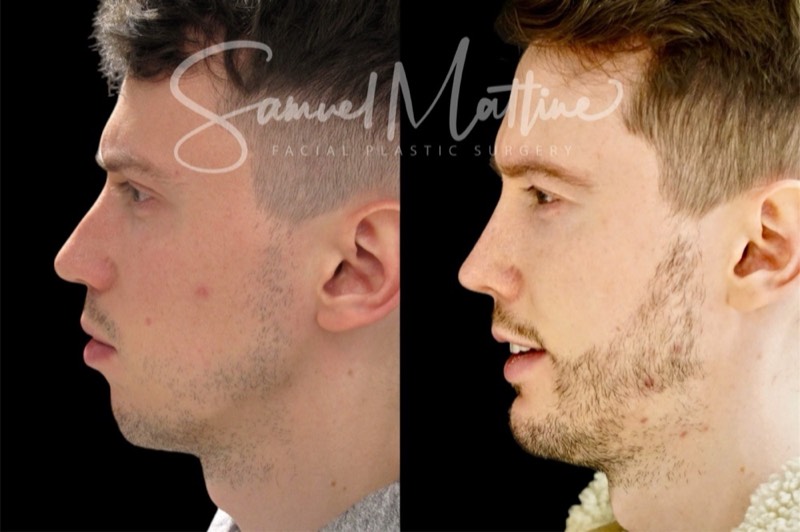
Real patients, natural results. 7 cases of facial implants performed by Mr Mattine.
View full galleryFacial Implants
Frequently asked questions
The aim is a result that belongs naturally to your face. Mr Mattine assesses the relationship between the forehead, temples, cheeks, under eye region, nose, chin, jawline and neck before recommending an implant, and chooses the shape and size in relation to your surrounding features rather than in isolation.




A reputation built on results
Surgery is ultimately judged not by its description, but by what it achieves.
Explore a selection of primary, revision and complex facial surgery cases performed by Mr Mattine, then arrange a consultation in London or Birmingham.